Archive for the ‘Biochar’ Category

Charcoal

30 June 2019

I’ve purchased 80 lbs of lump charcoal and plan to bury it or rototill it into the garden. This is my method of micro-sequestration of carbon. If everyone with access to a patch of land did this, it would make a difference.

Be that as it may, I’m also doing it to enhance the fertility of my soil. I’ve been doing this on a very small scale for years, limited by my intentional and incidental production of charcoal. I spread ashes from the wood stove in the garden (for their potassium content and to limit soil acidity) . There’s always some charcoal mixed in with the ashes, and if you clean out the ashes after every fire, you’ll often get a decent amount of charcoal. (If you don’t clean out the ashes before starting the next fire, what charcoal is present will be consumed.)

And, when I’m feeling ambitious, I make charcoal in a roasting pan in the woodstove. Between cutting up the wood and fitting it in the roasting pan and building the fire the right way, it’s a very hands-on process, and I don’t always have the time or inclination to do it.

So now I have 80 lbs of lump charcoal. Before whatever weed-suppression tillage I do, I will spread charcoal in the areas to be tilled. I will also create pockets of fertility by digging a hole and dumping in charcoal, kitchen scraps, and chicken manure.

I don’t plan to reduce the size of the lumps of charcoal. It’s too much work and unnecessary for long-term benefit, which is always my focus. Tillage and frost will, over time, do an adequate job of reducing the size of the lumps. And breaking it up into smaller pieces is time- and labor-consuming, as well as potentially hazardous to my health because of any dust produced.

I would do this even if I knew I were going to be dead in a year. Improving a patch of ground, making it more able to produce food for humans, is something that has a lot of meaning and significance to me. The long-lasting effects of burying charcoal in the garden mesh with that perfectly.
The Carbon Cycle

28 November 2013

The carbon cycle describes how carbon moves through the natural environment.

Plants take CO2 from the air, use the carbon in combination with water to make carbohydrates, and release oxygen to the atmosphere. When the plant dies, that carbon is released again as CO2. That release can be a result of decomposition, fire, or probably other means.

Right now, there is a relatively high concentration of CO2 in the atmosphere. I believe in anthropogenic climate change, so I think that high and increasing concentrations of CO2 are a result of burning of fossil fuels. In effect, we are adding carbon to the current carbon cycle. If it weren’t for humans, the vast majority of carbon in fossil fuels would remain buried and irrelevant.

Okay, I wrote the above without looking anything up, just using what was in my head.

(Looks at Wikipedia)

So I’m grossly over-simplifying and leaving out many aspects, but I’m not wrong. I think understanding the carbon cycle, even on a superficial level, clarifies what we need to do.

TLUD

28 November 2011

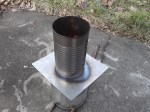
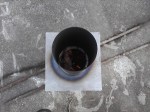
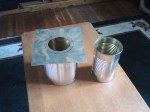
I made a TLUD a few days ago out of food cans and a piece of sheet metal. I set it on two pieces of rebar to allow the air to come up through the holes in the bottom of the big can.

It worked sort of okay when I tried it with small, random-size pieces of wood and bark. Had problems lighting it, keeping it going, and converting all the feedstock to char.

It worked really well when I used wood pellets. I had a good hot flame for cooking for about an hour, and all the pellets converted to charcoal.

Other stuff I need to do is make a support for holding whatever it is you’re cooking.

Getting Ready for Growing

28 March 2010

Another Sunday work day.

  • Watered hazelnuts I planted last fall.
  • Dug up area where collars and kale were last year, since it didn’t get dug last fall. Dug in a couple of gallons of coffee grounds. Pulled up the remaining collard roots and stalks and put them in the compost pile. Found lots of worms.
  • Several of the kale plants I planted last July made it through the winter (without any shelter other than the snow) and are growing new leaves. I watered those. I wonder if they’ll try to go to seed right away. If they do, I will let them and harvest the seed.
  • Dug a trench around upper edge of new west beds and dumped in contents of char/urine/fish emulsion bucket. Looked like not so much char and a lot of small pieces of uncharred wood. Sigh.
  • Dug up some clumps of sod in what last year was the new potato ground, and a few potatoes with it. I never got around to digging all the potatoes last fall. It was just so labor intensive and I was getting barely more potatoes out of it than I had planted. It was discouraging and put me off the idea of surviving on potatoes, although it would have been easier to dig them up if the ground had been worked properly. Corn. Corn is the answer.
  • Put a plastic tarp over some of the grassy area north of the fence, near the hazelnuts. I want to kill that grass over the next two months and plant some corn there.
  • Found a big piece of black plastic folded over next to the foundation of the garage. I started to unfold it and realized there was a nest of carpenter ants inside. I quickly dragged it to the back fence and threw it over, then went around and opened it up, hoping the birds would eat them. I hate carpenter ants. At least they weren’t inside the garage or house, although having them that close to it is kind of a bad sign.
  • Turned over the soil in the three raised beds. It’s in very good shape, and is ready for planting as soon as we dare.
  • Did the composting.
  • Removed the plastic trash can from under the SW drainspout, as it was cracked and not holding water. Extended the downspout a couple of feet to keep the water away from the foundation. I need to get serious about rainwater collection this year.
  • Untaped the two inside house windows I had taped last fall to keep out the wind.

And in a sure sign of a warm, dry spring, the little brown ants have re-invaded the kitchen.

But we’re only gardeners. If we don’t have animals, we’re not farmers. It’s pathetic, but I want to be a farmer, even though I am clueless about animal husbandry and haven’t the heart to do what needs to be done.

I’m Calling it Spring

7 March 2010

The geese have been flying around in pairs and small Vs honking for the last couple of weeks. We’re down to 80-90% snow cover. The compost was up to 81°F a couple of days ago. I heard a sandhill crane. I’m calling it Spring.

So today I planted a 7′ row of kale in the bed just outside the back door. I just dropped the seeds on top of the mud and sprinkled some potting soil on top. Nothing ventured, nothing gained. I also pounded in a couple of stakes at either end of the row and screwed a piece of scrap 1×2 between them, about 18″ off the ground, so I can drape plastic when we get hard freezes after they come up.

March can be such a wonderful and horrible month. I’m desperately longing for sun and warmth, and when the March sun shines on the snow and the wind dies for a moment, it’s almost there. But you know it won’t last and one more big snow is almost inevitable.

Also spread about 10 gallons of wood ashes and charcoal on the gardens. I’m using a 10-gallon metal trash can for getting the ashes out of the wood stove, which lets me do it while there are still coals in there. Those coals become charcoal. That then goes in the garden, slowly building up my terra preta. I’m only slightly concerned that it seems like an awful lot of ash this year — I hope I don’t make the soil too alkaline. On the other hand, this leaves me free to use more acidic organic matter in the garden, such as pine needles.

Got up on the roof today and swept the chimney. The screen at the top was completely blocked with dried creosote — the only way for the smoke to get out was a half-inch gap on top of the screen. There didn’t seem to be that much creosote in the chimney itself, except for the top inch or so (there were 2-3 cups of the stuff down in the stove after I got done).

That screen was quite disgusting — I had to knock the stuff out with the handle of my screwdriver, that’s how thick and hard it was. It’s difficult to believe we have been using the stove right along without major problems, although we certainly noticed that the draft was not what it should have been.

Anyway, if we’re burning a lot of wood, the mid-winter cleaning is not optional, and more frequently would be better. Pretty much whenever it’s warm and dry enough, I should get up there and do it. Maybe I should just take out that screen in the winter and put it back in in the Spring.

And yes, it takes all three extension rods to get the full length of the chimney.