Archive for the ‘Biochar’ Category

Composting

1 February 2010

Composted 10 5-gallon buckets of various stuff yesterday, mostly coffee grounds. That was a lot of work. It built up because I was out of state for 12 days and it’s been cold, which makes it difficult.

The main compost pile is now close to being frozen — it was reading 35°F in the middle of the pile, and it had a frozen layer outside of that I was unable to fully break through with my compost fork. I pulled the straw aside and put the new stuff on top, which worked okay for now, but it’s going to get tall fast if this situation continues. The worst of the cold weather should be pretty much over (famous last words), so maybe it will thaw a bit and become more active in the coming weeks.

Finished filling my 5-gallon bucket of char with a mix of roughly 50/50 urine/fish emulsion (diluted to normal fertilizer strength). That will soak for a few months, then it will go into the West beds.

Still trying to figure out ways to make char. I may try buying some of those wood pellets that you use in a pellet stove both to heat the retort and to turn into char.

Backyard Biochar, Take 2

20 December 2009

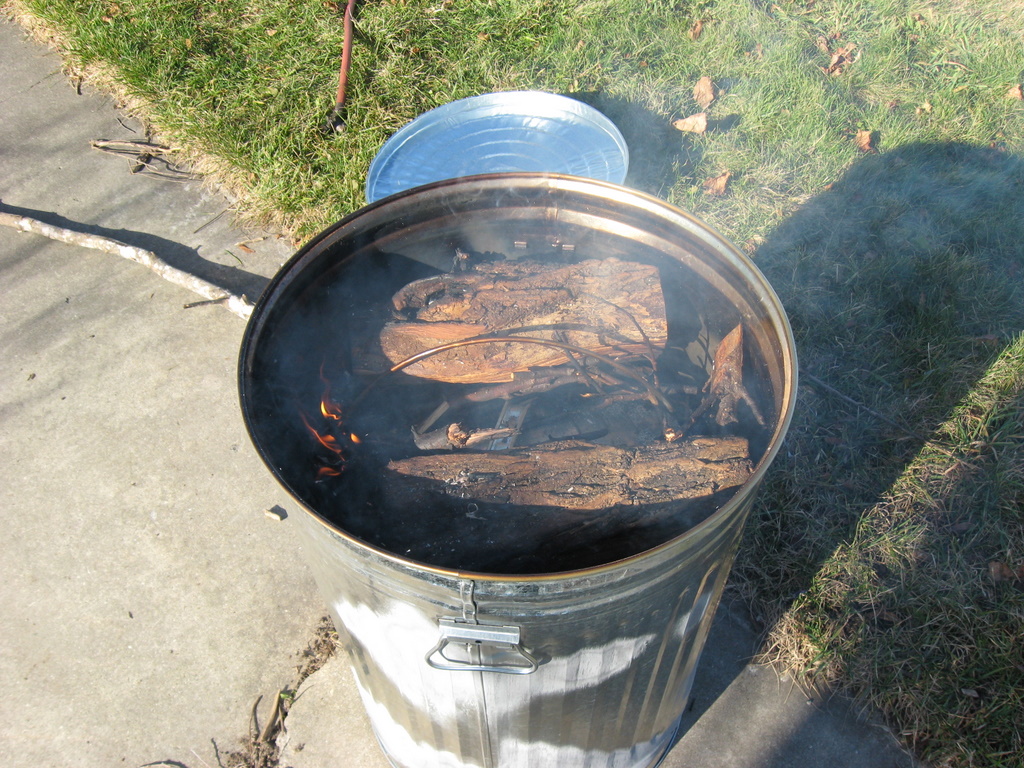
Okay, so I did another burn today in my second attempt to make biochar. I used the same system as before, but with only pine (to get the fire started) and oak, no brush.

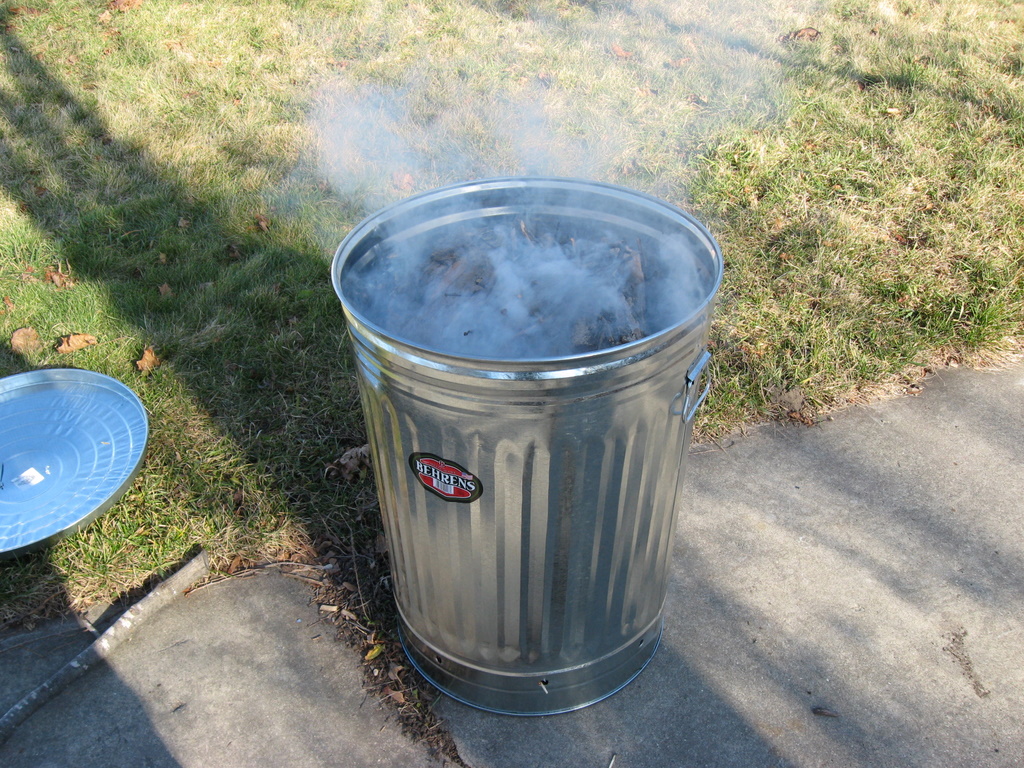
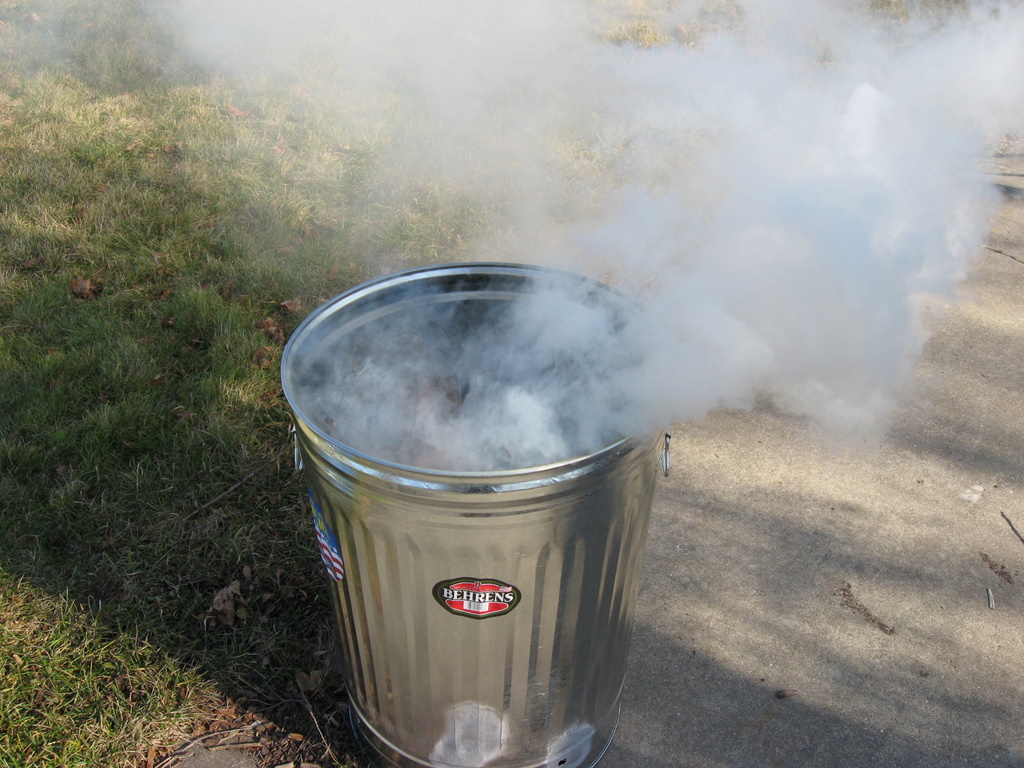
It seemed to work better, and definitely produced less smoke and more heat. I could see smoke coming out from under the lid of the inner trash can and getting burned in the fire. Most of the initial charge of wood was used up after about 45 minutes, and I only added a little more oak.

I think the biggest problem is with the size of the barrels — I can’t fit enough wood in between them to make a fire that is long-lasting and hot enough (although I haven’t observed the results of today’s burn yet). I need either a larger outer barrel or a smaller inner barrel, or both. I don’t want to have to be standing around for hours feeding the fire one kindling-sized piece at a time.

Other things to do to improve this system: make more holes in the bottom of the large can, insulate the large can.

Other ideas: make a masonry enclosure for cooking/biochar production; make a rocket stove/biochar production system, perhaps based on that 10-gallon trash can.

Update: The results were, if anything, worse than the first time. I’m just not getting enough heat into the feedstock.

More Thoughts on Biochar

13 December 2009

The more I read about biochar, the better I like the idea. Making it remains problematic.

I was thinking that a solar kiln made specifically for making biochar would be ideal. However, I later realized that would have a major problem: the release of methane from the wood into the atmosphere during pyrolysis, methane being a powerful greenhouse gas. I don’t know how to collect it — maybe that’s possible for a home handyman.

So I’m back to the idea of heating a relatively (but not completely) airtight container in an open fire. That way, the methane gets burned up and with a decent design adds to the heat of the fire and so the speed of pyrolysis.

The problem I had in my previous attempts was that I was burning softwood that was not dry. I need to use dry hardwood to make a good, hot fire, and also make sure it has a good draft. My goal is a hot, smokeless fire.

My trash can technique is not that bad, assuming a change to dry oak as a fuel. One additional change I could make would be a chimney attached to the top to enhance the draft.

First attempt at Biochar

1 December 2009

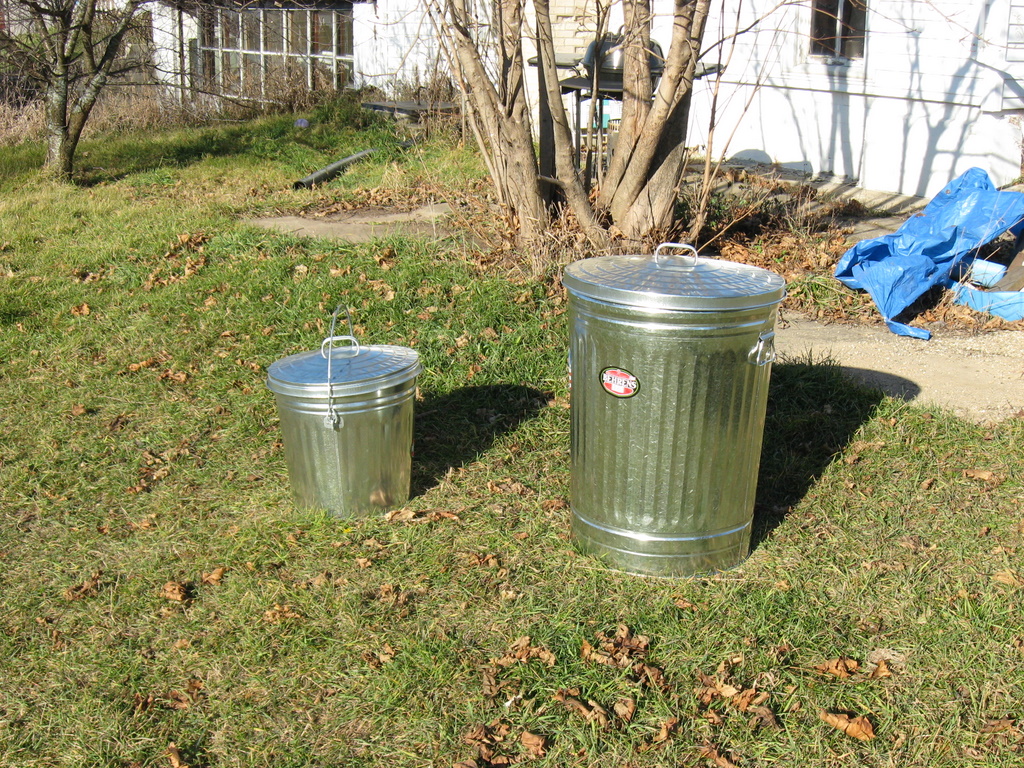
I bought new 10-gallon and 30-gallon galvanized metal trash cans.

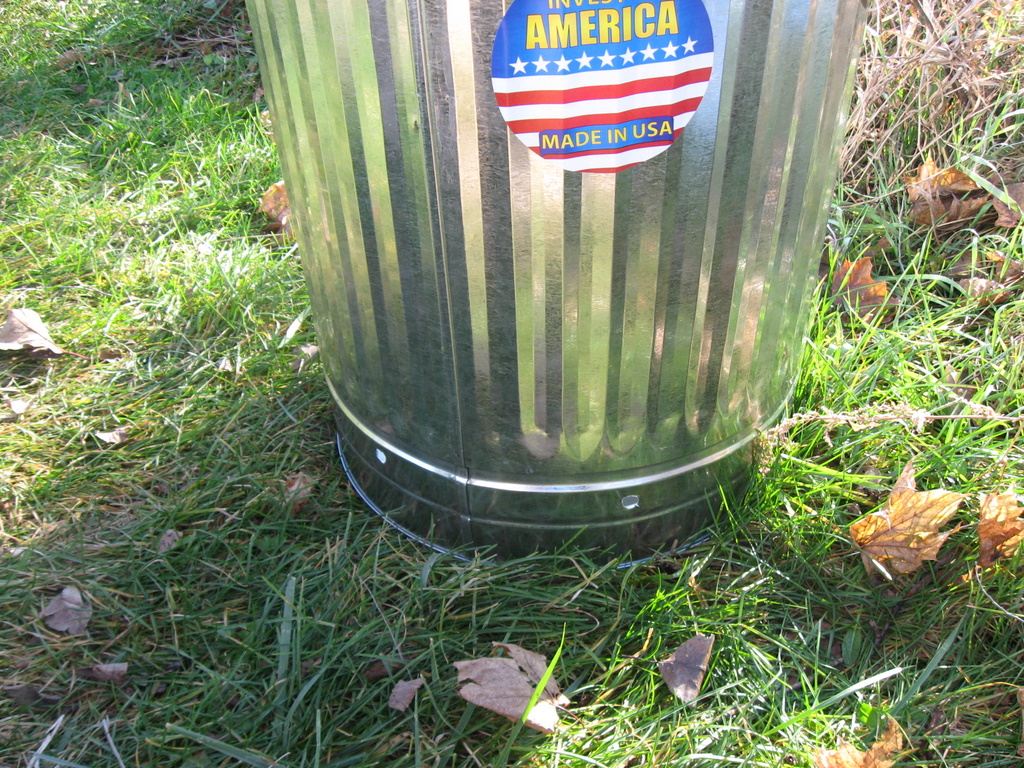
I put a concrete block in the bottom of the big one to raise the smaller one about 4″. I drilled 8 1/2″ holes around the bottom of the large one.

I put paper in the bottom, then filled the gap between the two cans with small sticks. The gap was only about 2″ all the way around, so not much room for the wood. I jammed in as much as I could, then put a couple of pieces of oak on the top. Next time, I think I should raise the small one another 6″ or so — that would give me more room to put larger pieces of wood underneath it, and also, since the sides of both slope outward as they come up, it would increase the size of the gap between them and make it easier to pack with wood. I’d like to get some larger pieces of oak in the bottom.

I packed the little one with small-diameter wood, mostly elm, put the top on it, and lit the paper through the holes in the bottom of the large can around 11am. I didn’t make any holes in the smaller can, trusting that gases would escape around the lid without building up enough pressure to cause an explosion.

It took a while to get burning, as the wood was right off our brush pile and not dry. I added a couple double handfuls of charcoal briquettes to the fire after maybe half an hour (of dubious merit with regards to carbon footprint, I know, but I wanted it to work). A lot of the wood had burned up after about 45 minutes, and at that point I added more 1/2″ to 1″ pieces. I put the top on it after about an hour.

I doubted the inner can got hot enough to make any char. I think raising the inner barrel and putting some oak underneath it would help quite a bit, and I’m not giving up on the system.

Four hours later, I took out the inner can and, sure enough, the wood was blackened, and some of it seemed to have become charcoal, but most not. I had put some old tomato vines on the top of the wood, and they seemed to be completely carbonized. Just not enough heat for the wood.

Later, I tried again, using the same wood in the inner can but adding more tomato vines. I raised the inner can another 5 inches with a concrete block, and made the fire with smallish pieces of oak. It got very hot, and I put the top on it after maybe 30 minutes because the steel of the outer can was glowing red and I didn’t want to burn a hole in it. There were some coals in the bottom, so it should have stayed hot for quite a while after I put the top on. I haven’t looked at the final result yet, but I’m much more optimistic this time.

Update: The second burn didn’t fully achieve the needed combination of temperature and time to turn the wood to charcoal. Only about half of it was converted to char.