Archive for the ‘Burning wood’ Category

Mini-Renovation

1 May 2021

I spent about six weeks working seven days a week to get our old house ready for some new tenants. I did mostly cleaning, finish carpentry, and painting. I didn’t get it all done, of course, since that house will never be done, but made a ton of progress. Here are a few pics.

Even though this house is old and requires a lot of ongoing maintenance, I love it. After living in it for 20+ years and raising our kids there, it feels like home to me. And the yard has lots of space for gardening and chickens, which our current home doesn’t.

I brought up the idea of moving back after the kids are out of the nest (five years at most), and the wife was not opposed to it. We’ll see.

The kitchen with freshly-painted floor.
Freshly-painted kitchen cabinets and backsplash. The backsplash is made out of cheap vinyl tiles.
Basketball schedule uncovered during renovation.
Our Vogelzang Durango and wood box (wood box later removed). Love this stove. We’ve told the tenants not to use it because we’re not insured for it, and there won’t be much occasion to use it before October. If we’re still renting at that time, we’ll have to remove the stove as well, and maybe replace it with a fake electric stove.
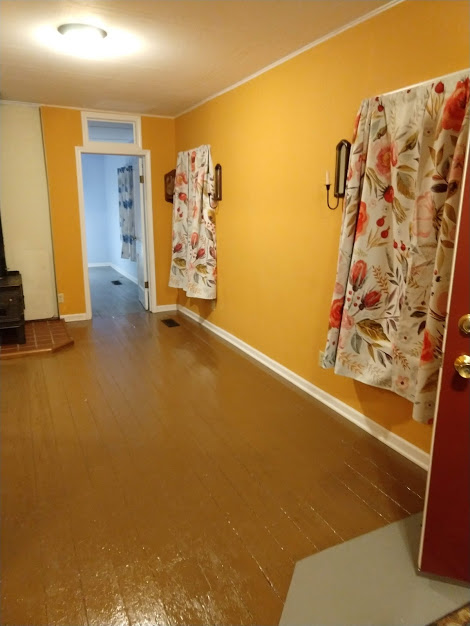
Freshly painted floor in front room.
From the dining room to the kitchen.
Living Room
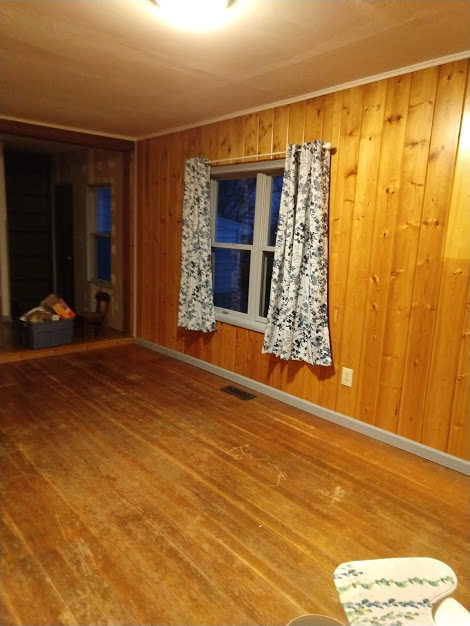
Dining room

Charcoal

30 June 2019

I’ve purchased 80 lbs of lump charcoal and plan to bury it or rototill it into the garden. This is my method of micro-sequestration of carbon. If everyone with access to a patch of land did this, it would make a difference.

Be that as it may, I’m also doing it to enhance the fertility of my soil. I’ve been doing this on a very small scale for years, limited by my intentional and incidental production of charcoal. I spread ashes from the wood stove in the garden (for their potassium content and to limit soil acidity) . There’s always some charcoal mixed in with the ashes, and if you clean out the ashes after every fire, you’ll often get a decent amount of charcoal. (If you don’t clean out the ashes before starting the next fire, what charcoal is present will be consumed.)

And, when I’m feeling ambitious, I make charcoal in a roasting pan in the woodstove. Between cutting up the wood and fitting it in the roasting pan and building the fire the right way, it’s a very hands-on process, and I don’t always have the time or inclination to do it.

So now I have 80 lbs of lump charcoal. Before whatever weed-suppression tillage I do, I will spread charcoal in the areas to be tilled. I will also create pockets of fertility by digging a hole and dumping in charcoal, kitchen scraps, and chicken manure.

I don’t plan to reduce the size of the lumps of charcoal. It’s too much work and unnecessary for long-term benefit, which is always my focus. Tillage and frost will, over time, do an adequate job of reducing the size of the lumps. And breaking it up into smaller pieces is time- and labor-consuming, as well as potentially hazardous to my health because of any dust produced.

I would do this even if I knew I were going to be dead in a year. Improving a patch of ground, making it more able to produce food for humans, is something that has a lot of meaning and significance to me. The long-lasting effects of burying charcoal in the garden mesh with that perfectly.

Thermal Mass

20 January 2013

I’ve surrounded our cast iron wood stove with some thermal mass: about 9 gallons of water and a couple hundred pounds of brick and concrete. This has:

  • slowed the rate at which the stove warms the room & house after lighting a fire.
  • extended by 6 hours or so the time during which the heat from the fire heats the house after the fire goes out

That’s all fine and good, but what has it really gained us? There’s not enough thermal mass to allow us to treat it like a Russian stove and build just one or two fires a day. From a time and effort standpoint, considering the extra labor involved in splitting kindling and building a new fire, it doesn’t make sense to let the fire go out and relight it every few hours.

So as I see it, we don’t yet have enough thermal mass to have just a couple of fires a day, and it might be hard to get enough around the stove. And if you’re not at that point, the only real benefit is that the stove/mass keeps heating the house for six hours or so after you let the fire go out. More thermal mass will further slow the rate at which the  stove warms the house, but will extend further the stove/mass heating of the house after the fire goes out, and eventually you would arrive at the ideal of just one or two fires a day…probably.

There is the possibility that a cast iron or steel stove lets too much heat escape up the chimney to ever be able to adequately heat whatever thermal mass surrounds it to get down to the 1 or 2 fires/day ideal. One of the advantages of a Russian stove is that exhaust gases from the fire are channeled through masonry, capturing more of the total heat output of the fire. Surrounding a conventional iron or steel stove with thermal mass would be like building a Russian stove that had thermal mass only around the firebox — obviously much worse at capturing heat.

And so it’s still a question in my mind as to whether conventional stove with thermal mass can ever get even close to the Russian stove performance ideal.

Swept the Chimney

11 December 2011

Swept the chimney today. Got maybe 3/4 cup of gunk down in the stove, and it seemed pretty dry and unlikely to burn.

Why did I sweep the chimney today? I just did it two months ago, and we haven’t had that many fires since then.

Well, it was up to about 45°F, it was dry, and I figured I might as well do it before it got cold and wet and before entering the main wood-burning season. Who knows when I’ll get a chance to do it again?

I bought some of the creosote-be-gone stuff a couple days ago, and will start using it soon. It’s supposed to convert creosote deposits into a dry, flaky, less-combustible form.

The Problems with Woodstoves

10 December 2011

What are the problems with woodstoves?

  1. They send a lot of heat up the chimney
  2. They only heat while they’re burning. Because they only heat while they’re burning, users attempt to get longer-lasting heat by restricting air and slowing down the fire. But when you restrict air, you get smoky, polluting, and inefficient burning.

The answer to number 2 is to add thermal mass. If you have adequate thermal mass, you can build small, hot, brief fires. You don’t restrict air, so the fire burns cleanly and efficiently. The thermal mass continues to provide heat after the fire goes out. The more thermal mass you have, and the hotter it gets, the better it works.

Problem number 1 is not addressed directly, but it’s mitigated by not having a fire burning all the time. The less time you have a fire burning, the less heat will be going out the chimney.

So…why doesn’t everyone have huge thermal mass surrounding their woodstoves?

First, lack of knowledge. Most people haven’t gone through this process of figuring out what the problems are with their woodstove.

Second, thermal mass is massive. To have a serious amount of mass in a typical house, you have to reinforce the floor.

Third, unless you make and install your thermal mass with care and skill, it might not look so good. For most people, woodstoves are for ambiance as much as anything. Having their stove surrounded by used cinder blocks would not be appealing to most people.

And finally, in America there’s traditionally been little or no thermal mass besides the stove itself.